

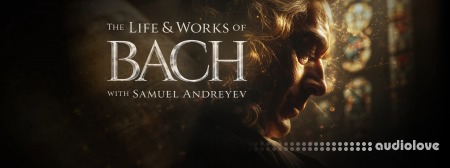
Peterson Academy The Life and Works of Bach [TUTORiAL]
P2P | 12 April 2026 | 7.45 GB
In The Life & Works of Bach, an eight-hour course, Samuel Andreyev traces Johann Sebastian Bach’s extraordinary impact on Western music, from intricate keyboard works to monumental sacred compositions. Along the way, we learn about his remarkable life, from his musical family and early training to his professional posts and personal challenges.
Analyzing masterpieces such as the “Orgelbüchlein,” cantatas, the “St. Matthew Passion,” the “Goldberg Variations,” “The Musical Offering,” and “The Art of Fugue,” we uncover his unmatched contrapuntal skill, expressive depth, and genius for creating vast musical worlds from simple ideas that continue to inspire listeners and performers across generations.
1. Bach’s Musical World
In our introductory lecture, Samuel Andreyev explains why Johann Sebastian Bach stands as a central figure in Western art music, examining his extraordinary breadth of achievement and enduring appeal. Together, we explore Bach’s unique ability to unite abstract complexity with deep expressivity, his relentless pursuit of craft, and his creation of works that continue to reveal new meanings to performers and listeners across generations. The lecture traces Bach’s life and career, showing how his devotion to complex polyphonic writing—despite changing musical fashions—produced music of unparalleled depth, reflecting a worldview shaped by theology, philosophy, science, and art.
2. Bach’s Organ Genius
In lecture two, we explore Bach’s compositional genius through the Orgelbüchlein (“Little Organ Book”), a collection of 46 chorale preludes written during his Weimar years (1708–1717). Focusing on works such as “In dulci jubilo,” a radiant double canon, and “Durch Adams Fall,” with its unsettling chromatic bass, we see how Bach transforms simple hymn tunes into densely expressive polyphonic worlds. These minute-long pieces compress astonishing complexity, bend our sense of musical time, and use vivid symbolism to convey human emotion. The lecture also reveals Bach’s methodical, encyclopedic approach to composition and his uncanny ability to elevate the humblest material to extraordinary artistic heights.
3. Didactic Inventions
In lecture three, we delve into Bach's work during his time as Kapellmeister in Köthen, focusing on his “Inventions and Sinfonias,” didactic keyboard pieces written for his son’s musical education. We examine how Bach creates these works from simple motifs that develop through techniques like invertible counterpoint and rhythmic complementarity, where each voice maintains independence while contributing to a unified texture. The lecture concludes by exploring how these pieces reflect Bach's compositional approach during a period that also produced the “Brandenburg Concertos,” “Cello Suites,” and the first book of “The Well-Tempered Clavier.”
4. Cantatas
In lecture four, we turn to Bach’s cantatas, focusing on his prolific Leipzig years, when he composed a new work nearly every week for the church calendar. We examine the typical structure—choruses, recitatives, arias, and chorales—and analyze “Jesu, der du meine Seele” as a representative example, showing how repeating bass lines and figural musical devices illuminate themes of sin and redemption. Andreyev concludes by discussing Bach’s compositional process, historical performance conditions, and the astonishing consistency of his inspiration across more than 300 cantatas written under intense demands.
5. St. Matthew Passion
In lecture five, we analyze Bach’s monumental “St. Matthew Passion” (1726), exploring its vast scale, with double orchestra, double choir, and an additional soprano choir creating unprecedented spatial and sonic effects across its two and a half hours. We trace the work’s structure—alternating narrative recitatives, reflective arias, and communal chorales—and note its near disappearance until Mendelssohn’s 1829 revival sparked the modern Bach revival movement. The lecture affirms the Passion as one of Western music’s supreme achievements, demonstrating Bach’s unparalleled ambition in creating an artwork that remains emotionally and technically formidable.
6. Goldberg Variations
In lecture six, we study Bach’s “Goldberg Variations” (1741), a monumental keyboard work from his final decade, when he turned toward grand, encyclopedic projects. Built from an aria and thirty variations based on a ground bass, the piece surveys Baroque dances, national styles, and canonic techniques with astonishing invention. The lecture also traces how Glenn Gould’s 1955 recording brought the work into the mainstream and considers the interpretive challenges and Bach’s ability to create endless variety within strict constraints.
7. The Musical Offering
In lecture seven, we study Bach’s late masterpiece “The Musical Offering” (1747), born from his fascination with generating entire worlds from a single musical idea. After being challenged by King Frederick the Great with a deliberately difficult theme, Bach improvised a fugue on the spot and later transformed the theme into an extraordinary collection of fugues, canons, and a trio sonata. Andreyev reveals this work as a summit of Bach’s contrapuntal art and contrasts his dense, learned style with the emerging galant aesthetic of the mid-18th century, represented by his son Carl Philipp Emanuel Bach.
8. The Art of Fugue
In our eighth and final lecture, we dive into Bach’s final masterpiece, “The Art of Fugue,” a dazzling exploration of contrapuntal craft built from a single four-bar subject. Across fourteen fugues—featuring inversions, augmentations, diminutions, and mirror forms—Bach pushes musical logic to its limits, all in abstract open score without specified instruments. We reflect on its unfinished state, its mysterious performance context, and how this work stands as the final testament to Bach’s unparalleled genius and lasting influence on Western music.
home page
Analyzing masterpieces such as the “Orgelbüchlein,” cantatas, the “St. Matthew Passion,” the “Goldberg Variations,” “The Musical Offering,” and “The Art of Fugue,” we uncover his unmatched contrapuntal skill, expressive depth, and genius for creating vast musical worlds from simple ideas that continue to inspire listeners and performers across generations.
1. Bach’s Musical World
In our introductory lecture, Samuel Andreyev explains why Johann Sebastian Bach stands as a central figure in Western art music, examining his extraordinary breadth of achievement and enduring appeal. Together, we explore Bach’s unique ability to unite abstract complexity with deep expressivity, his relentless pursuit of craft, and his creation of works that continue to reveal new meanings to performers and listeners across generations. The lecture traces Bach’s life and career, showing how his devotion to complex polyphonic writing—despite changing musical fashions—produced music of unparalleled depth, reflecting a worldview shaped by theology, philosophy, science, and art.
2. Bach’s Organ Genius
In lecture two, we explore Bach’s compositional genius through the Orgelbüchlein (“Little Organ Book”), a collection of 46 chorale preludes written during his Weimar years (1708–1717). Focusing on works such as “In dulci jubilo,” a radiant double canon, and “Durch Adams Fall,” with its unsettling chromatic bass, we see how Bach transforms simple hymn tunes into densely expressive polyphonic worlds. These minute-long pieces compress astonishing complexity, bend our sense of musical time, and use vivid symbolism to convey human emotion. The lecture also reveals Bach’s methodical, encyclopedic approach to composition and his uncanny ability to elevate the humblest material to extraordinary artistic heights.
3. Didactic Inventions
In lecture three, we delve into Bach's work during his time as Kapellmeister in Köthen, focusing on his “Inventions and Sinfonias,” didactic keyboard pieces written for his son’s musical education. We examine how Bach creates these works from simple motifs that develop through techniques like invertible counterpoint and rhythmic complementarity, where each voice maintains independence while contributing to a unified texture. The lecture concludes by exploring how these pieces reflect Bach's compositional approach during a period that also produced the “Brandenburg Concertos,” “Cello Suites,” and the first book of “The Well-Tempered Clavier.”
4. Cantatas
In lecture four, we turn to Bach’s cantatas, focusing on his prolific Leipzig years, when he composed a new work nearly every week for the church calendar. We examine the typical structure—choruses, recitatives, arias, and chorales—and analyze “Jesu, der du meine Seele” as a representative example, showing how repeating bass lines and figural musical devices illuminate themes of sin and redemption. Andreyev concludes by discussing Bach’s compositional process, historical performance conditions, and the astonishing consistency of his inspiration across more than 300 cantatas written under intense demands.
5. St. Matthew Passion
In lecture five, we analyze Bach’s monumental “St. Matthew Passion” (1726), exploring its vast scale, with double orchestra, double choir, and an additional soprano choir creating unprecedented spatial and sonic effects across its two and a half hours. We trace the work’s structure—alternating narrative recitatives, reflective arias, and communal chorales—and note its near disappearance until Mendelssohn’s 1829 revival sparked the modern Bach revival movement. The lecture affirms the Passion as one of Western music’s supreme achievements, demonstrating Bach’s unparalleled ambition in creating an artwork that remains emotionally and technically formidable.
6. Goldberg Variations
In lecture six, we study Bach’s “Goldberg Variations” (1741), a monumental keyboard work from his final decade, when he turned toward grand, encyclopedic projects. Built from an aria and thirty variations based on a ground bass, the piece surveys Baroque dances, national styles, and canonic techniques with astonishing invention. The lecture also traces how Glenn Gould’s 1955 recording brought the work into the mainstream and considers the interpretive challenges and Bach’s ability to create endless variety within strict constraints.
7. The Musical Offering
In lecture seven, we study Bach’s late masterpiece “The Musical Offering” (1747), born from his fascination with generating entire worlds from a single musical idea. After being challenged by King Frederick the Great with a deliberately difficult theme, Bach improvised a fugue on the spot and later transformed the theme into an extraordinary collection of fugues, canons, and a trio sonata. Andreyev reveals this work as a summit of Bach’s contrapuntal art and contrasts his dense, learned style with the emerging galant aesthetic of the mid-18th century, represented by his son Carl Philipp Emanuel Bach.
8. The Art of Fugue
In our eighth and final lecture, we dive into Bach’s final masterpiece, “The Art of Fugue,” a dazzling exploration of contrapuntal craft built from a single four-bar subject. Across fourteen fugues—featuring inversions, augmentations, diminutions, and mirror forms—Bach pushes musical logic to its limits, all in abstract open score without specified instruments. We reflect on its unfinished state, its mysterious performance context, and how this work stands as the final testament to Bach’s unparalleled genius and lasting influence on Western music.
home page
Only registered users can see Download Links. Please or login.
No comments yet