

School of Song Songwriting Workshop with A.G. Cook (August 25) [TUTORiAL]
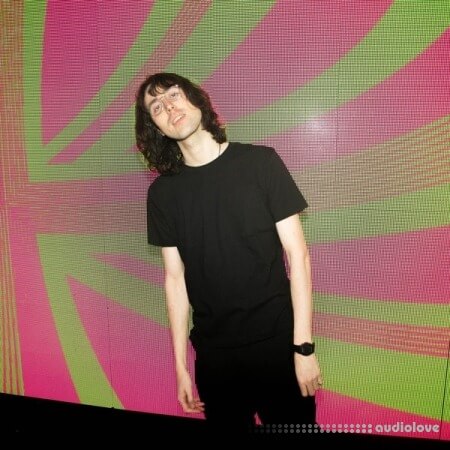
FANTASTiC | 22 August 2026 | 5.63 GB
In August 2025, A. G. Cook led a four-week School of Song workshop that treats songwriting and production as a set of learnable design principles - equal parts listening practice, compositional strategy, and world-building.
Class 1 (Contrast) sets the foundation: how opposing sounds and elements create motion, how lyrical tone vs. musical tone can generate emotional complexity, and how shifts in density (horizontal and vertical) and arrangement scale (small-to-big) shape a track’s arc. The lecture moves through clear examples, visual scores, and DAW-level breakdowns so you can hear (and then build) contrast deliberately.
Class 2: Self as Collaborator flips the focus inward: how limitations become a creative partner. We explore Games & Systems (from lyric oracles, dice, and cut-up logic to broader constraint-based writing), Persona as a compositional tool (including “imaginary genres” as a way to invent new rulesets), and Photographic Songwriting—starting from a concrete image, memory, or document-like moment, building full structure from a raw sketch, then translating that original “snapshot” into a finished production without losing the source feeling. The throughline is collaborator-collage: building a coherent world and a clear set of rules so other people (and future-you) can enter the song and make meaningful choices inside it.
Class 3: Covers uses covers and rewrites as study - less about imitation, more about reverse-engineering taste. A. G. breaks down why to make covers (style, voice, arrangement, effect chains, structure), how to identify the elements that “pop out,” and how to convert that analysis into original work. The class includes detailed walk-throughs—down to stems, sessions, and the logic of note-for-note complexity versus intentional simplification—so you learn how to “read” a track like a blueprint, then apply those moves to your own writing without losing your identity.
Class 4 is a rapid, high-level suite of lectures that zooms between micro technique and macro architecture: Feedback (how to detect where something is weird—without needing the perfect fix), Alone Together (collaboration models and band-project dynamics), and Metastructure (how big projects hold together across many songs). From there it expands into Opposing Teams (creative roles and split approaches inside a project), Two Tempos Theory (how tempo perception changes in different ranges and why that matters for feel), Edges of Sound Design (when complexity helps, when it’s obligation, and how to get deep results with fewer tools), and Plotting Live Performance (live as its own version—less “authenticity,” more communication, staging, and re-making material for the room). Across all four weeks, you leave with names, frameworks, and repeatable methods for making bolder decisions, building stronger sonic worlds, collaborating more clearly, and finishing work that feels intentional at every scale.
This archived course includes:
home page
Class 1 (Contrast) sets the foundation: how opposing sounds and elements create motion, how lyrical tone vs. musical tone can generate emotional complexity, and how shifts in density (horizontal and vertical) and arrangement scale (small-to-big) shape a track’s arc. The lecture moves through clear examples, visual scores, and DAW-level breakdowns so you can hear (and then build) contrast deliberately.
Class 2: Self as Collaborator flips the focus inward: how limitations become a creative partner. We explore Games & Systems (from lyric oracles, dice, and cut-up logic to broader constraint-based writing), Persona as a compositional tool (including “imaginary genres” as a way to invent new rulesets), and Photographic Songwriting—starting from a concrete image, memory, or document-like moment, building full structure from a raw sketch, then translating that original “snapshot” into a finished production without losing the source feeling. The throughline is collaborator-collage: building a coherent world and a clear set of rules so other people (and future-you) can enter the song and make meaningful choices inside it.
Class 3: Covers uses covers and rewrites as study - less about imitation, more about reverse-engineering taste. A. G. breaks down why to make covers (style, voice, arrangement, effect chains, structure), how to identify the elements that “pop out,” and how to convert that analysis into original work. The class includes detailed walk-throughs—down to stems, sessions, and the logic of note-for-note complexity versus intentional simplification—so you learn how to “read” a track like a blueprint, then apply those moves to your own writing without losing your identity.
Class 4 is a rapid, high-level suite of lectures that zooms between micro technique and macro architecture: Feedback (how to detect where something is weird—without needing the perfect fix), Alone Together (collaboration models and band-project dynamics), and Metastructure (how big projects hold together across many songs). From there it expands into Opposing Teams (creative roles and split approaches inside a project), Two Tempos Theory (how tempo perception changes in different ranges and why that matters for feel), Edges of Sound Design (when complexity helps, when it’s obligation, and how to get deep results with fewer tools), and Plotting Live Performance (live as its own version—less “authenticity,” more communication, staging, and re-making material for the room). Across all four weeks, you leave with names, frameworks, and repeatable methods for making bolder decisions, building stronger sonic worlds, collaborating more clearly, and finishing work that feels intentional at every scale.
This archived course includes:
- Class Video Recordings – Watch all 4 of A. G.'s lectures and Q&As on his songwriting process.
- All course materials, including songwriting prompts crafted by A. G.
home page
Only registered users can see Download Links. Please or login.
No comments yet