

Windows
Cherry Audio Memorymode V2 v1.0.9.75 [WiN]
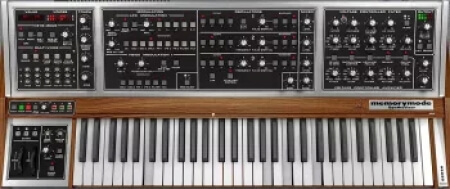
Team R2R | 30 August 2026 | 115.73 MB
Memorymode 2 is a virtual instrument inspired by one of the most iconic polyphonic programmable analog synthesizers of the 1980s: the legendary Memorymoog. This is not just a basic version update; Cherry Audio has completely transformed its highly acclaimed 2021 flagship synthesizer by employing cutting-edge analysis and emulation techniques, resulting in unmatched accuracy and precision. Furthermore, we have significantly expanded its features, firmly establishing Memorymode 2 as the definitive successor to both the original synth and our groundbreaking tribute to it.
The 1982 Memorymoog set a new standard for sound quality with its rich analog tones. It featured six-voice polyphony and is often described as "six Minimoogs in one," with a total of 18 voltage-controlled oscillators (VCOs) and the 24 dB/octave Moog ladder filter. Cherry Audio's Memorymode, modeled after a vintage Memorymoog once owned by jazz legend Chick Corea, enhanced the original design without compromising its sound and functionality, while also eliminating the reliability, maintenance, and tuning issues often associated with the hardware.
A list of other prominent performers known for using the Memorymoog is itself memorable, and includes: 808 State, Air, Art of Noise, David Bryan (Bon Jovi), The Cars, The Crystal Method, Geoff Downes (Asia/Yes), George Duke, Larry Fast, Jim Gilmore (SAGA), Jerry Goldsmith, Jan Hammer, Herbie Hancock, INXS, Jean-Michel Jarre, James "Jimmy Jam" Harris III, Jon Lord (Deep Purple/Whitesnake), Moog Cookbook, The Orb, Nick Rhodes (Duran Duran), Klaus Schulze, Space Art, and Tangerine Dream. The Memorymoog was the last significant synthesizer released by Moog Music during the 1980s, including its revision, the Memorymoog Plus in 1985.
Memorymode 2 Features:
The ultimate Memorymoog emulation, reengineered by Cherry Audio with its latest comprehensive circuit and behavior modeling techniques to provide unparalleled accuracy to - and exclusive compatibility with - the original hardware
Highly optimized, massive dual-layer voicing architecture with 16 polyphonic voices per layer. Keyboard split and stacked layer modes allow two simultaneously playable layers, with separate per-layer controls for all parameters, including synthesis, modulation, patterns, and effects
Newly remodeled three-oscillator voice architecture with ramp, triangle, and variable-width pulse waves, with noise and oscillator sync
Precisely recreated ladder filter with selectable 12- and 24-dB/octave slopes
Modern button for beefy lows and crystalline highs
New optional Emphasis Compensation switch to maintain sound level and low-frequency weight as emphasis is increased.
Two full ADSR envelopes per layer with velocity, independently assignable to filter, amp, and modulation for expressive control and dynamic sound shaping
Two tempo-syncable LFOs for each layer with seven waveforms, with reset option
Two voice modulation panels per layer using oscillator 3 and filter envelope as modulation sources, with up to six simultaneous destinations
Analog drift control for increased analog realism
Mono and Unison modes with note priority, Polyphonic modes with voice cycling, and single-key Chord Memory assign mode
Enhanced performance capabilities through polyphonic aftertouch and MIDI Polyphonic Expression (MPE)
Multi-voice mode with presets and adjustable trimmers to provide subtle or extreme voice variation in pitch, panning, filter, and envelopes to tones and patterns
"Digital display" interface with before/after parameter values, and display of extended settings such as number of voices, trigger and note priority, unison voices, multi-voice modes, condition, and drift
Over 800 sensational presets by sound design pros, including the Memorymode version 1 presets and precise recreations of the 100 original Memorymoog factory patches, all accessible in the newly redesigned preset browser.
Comprehensive Touch modulation matrix with four slots and simple click-to-assign functionality with 52 destinations, with optional MPE assignment for Velocity, X, Y, and Z expression
Syncable and transposable arpeggiator for each layer with Arp, Leap, Order, and Random modes, and Swing, Chance, and Feel to add degrees of randomness to arpeggiated patterns
Syncable and transposable 16x4 polyphonic step sequencer for each layer with Start, Stop, Auto Start, and humanize options, with accurate DAW clock and step synchronization
Touch Animator, an additional per-layer sequencer that acts as a 16-step x 4-pattern modulation source, varying the amount of modulation applied by the four Touch modulation slots
Three independent customizable chains of effects, one for each layer plus a global layer, with an individual effects modulator for each layer
22 studio-quality effects that can be arranged, saved, and recalled within their effects chains: BBD Flanger, Compressor, DCO Chorus, Digital Delay, Digital Reverb, Distortion & EQ, Dual Delay, Dual Ensemble, Dual Phaser, Envelope Filter, Flanger & Chorus, Galactic Reverb, Lo-Fi, Lushverb (improved!), Panner, Pulser, Ring Modulator, Seven Band EQ, Spring Reverb (improved!), and Tape Echo. New in Memorymode 2 are Wide Phaser (the updated Phaser effect from the original Memorymode) and Rotary Speaker.
Effects control tray for on/off, solo, bipolar modulator amount slider, and dry/wet mix for each effect. Global FX on/off, level, and stereo expand
Utility panels to easily copy, paste, swap, and move layers, effects chains, and sequencer data between presets
Tape Data Import: Import 100-program Memorymoog cassette tape data backups made with the original Chroma (uncompressed .wav files, mono/stereo, any sample rate or bit depth)
Directly import original Memorymoog patch bank SysEx data (Lintronics Advanced Memorymoog format) via drag-and-drop
Standalone virtual instrument and plug-in versions included
User-adjustable oversampling control
Complete MIDI control and DAW automation for all controls, with easy-to-use MIDI learn and mapping (Preset and Global)
Cherry Audio's popular Focus zoom-in feature, as well as standard UI zoom and resize via drag
Complete documentation available directly online from the instrument or in downloadable PDF format
home page
The 1982 Memorymoog set a new standard for sound quality with its rich analog tones. It featured six-voice polyphony and is often described as "six Minimoogs in one," with a total of 18 voltage-controlled oscillators (VCOs) and the 24 dB/octave Moog ladder filter. Cherry Audio's Memorymode, modeled after a vintage Memorymoog once owned by jazz legend Chick Corea, enhanced the original design without compromising its sound and functionality, while also eliminating the reliability, maintenance, and tuning issues often associated with the hardware.
A list of other prominent performers known for using the Memorymoog is itself memorable, and includes: 808 State, Air, Art of Noise, David Bryan (Bon Jovi), The Cars, The Crystal Method, Geoff Downes (Asia/Yes), George Duke, Larry Fast, Jim Gilmore (SAGA), Jerry Goldsmith, Jan Hammer, Herbie Hancock, INXS, Jean-Michel Jarre, James "Jimmy Jam" Harris III, Jon Lord (Deep Purple/Whitesnake), Moog Cookbook, The Orb, Nick Rhodes (Duran Duran), Klaus Schulze, Space Art, and Tangerine Dream. The Memorymoog was the last significant synthesizer released by Moog Music during the 1980s, including its revision, the Memorymoog Plus in 1985.
Memorymode 2 Features:
The ultimate Memorymoog emulation, reengineered by Cherry Audio with its latest comprehensive circuit and behavior modeling techniques to provide unparalleled accuracy to - and exclusive compatibility with - the original hardware
Highly optimized, massive dual-layer voicing architecture with 16 polyphonic voices per layer. Keyboard split and stacked layer modes allow two simultaneously playable layers, with separate per-layer controls for all parameters, including synthesis, modulation, patterns, and effects
Newly remodeled three-oscillator voice architecture with ramp, triangle, and variable-width pulse waves, with noise and oscillator sync
Precisely recreated ladder filter with selectable 12- and 24-dB/octave slopes
Modern button for beefy lows and crystalline highs
New optional Emphasis Compensation switch to maintain sound level and low-frequency weight as emphasis is increased.
Two full ADSR envelopes per layer with velocity, independently assignable to filter, amp, and modulation for expressive control and dynamic sound shaping
Two tempo-syncable LFOs for each layer with seven waveforms, with reset option
Two voice modulation panels per layer using oscillator 3 and filter envelope as modulation sources, with up to six simultaneous destinations
Analog drift control for increased analog realism
Mono and Unison modes with note priority, Polyphonic modes with voice cycling, and single-key Chord Memory assign mode
Enhanced performance capabilities through polyphonic aftertouch and MIDI Polyphonic Expression (MPE)
Multi-voice mode with presets and adjustable trimmers to provide subtle or extreme voice variation in pitch, panning, filter, and envelopes to tones and patterns
"Digital display" interface with before/after parameter values, and display of extended settings such as number of voices, trigger and note priority, unison voices, multi-voice modes, condition, and drift
Over 800 sensational presets by sound design pros, including the Memorymode version 1 presets and precise recreations of the 100 original Memorymoog factory patches, all accessible in the newly redesigned preset browser.
Comprehensive Touch modulation matrix with four slots and simple click-to-assign functionality with 52 destinations, with optional MPE assignment for Velocity, X, Y, and Z expression
Syncable and transposable arpeggiator for each layer with Arp, Leap, Order, and Random modes, and Swing, Chance, and Feel to add degrees of randomness to arpeggiated patterns
Syncable and transposable 16x4 polyphonic step sequencer for each layer with Start, Stop, Auto Start, and humanize options, with accurate DAW clock and step synchronization
Touch Animator, an additional per-layer sequencer that acts as a 16-step x 4-pattern modulation source, varying the amount of modulation applied by the four Touch modulation slots
Three independent customizable chains of effects, one for each layer plus a global layer, with an individual effects modulator for each layer
22 studio-quality effects that can be arranged, saved, and recalled within their effects chains: BBD Flanger, Compressor, DCO Chorus, Digital Delay, Digital Reverb, Distortion & EQ, Dual Delay, Dual Ensemble, Dual Phaser, Envelope Filter, Flanger & Chorus, Galactic Reverb, Lo-Fi, Lushverb (improved!), Panner, Pulser, Ring Modulator, Seven Band EQ, Spring Reverb (improved!), and Tape Echo. New in Memorymode 2 are Wide Phaser (the updated Phaser effect from the original Memorymode) and Rotary Speaker.
Effects control tray for on/off, solo, bipolar modulator amount slider, and dry/wet mix for each effect. Global FX on/off, level, and stereo expand
Utility panels to easily copy, paste, swap, and move layers, effects chains, and sequencer data between presets
Tape Data Import: Import 100-program Memorymoog cassette tape data backups made with the original Chroma (uncompressed .wav files, mono/stereo, any sample rate or bit depth)
Directly import original Memorymoog patch bank SysEx data (Lintronics Advanced Memorymoog format) via drag-and-drop
Standalone virtual instrument and plug-in versions included
User-adjustable oversampling control
Complete MIDI control and DAW automation for all controls, with easy-to-use MIDI learn and mapping (Preset and Global)
Cherry Audio's popular Focus zoom-in feature, as well as standard UI zoom and resize via drag
Complete documentation available directly online from the instrument or in downloadable PDF format
home page
Only registered users can see Download Links. Please or login.
No comments yet